Smart Logistics
How Technology Is Transforming Modern Logistics
How connected information, warehouse systems and practical automation help logistics teams improve visibility and make better operating decisions.
7 min read

From disconnected updates to an operating picture
Traditional logistics often depended on phone calls, spreadsheet updates and information arriving after the physical movement had already changed. Those tools still have a role, but they can leave teams reacting to events rather than managing them. Technology-supported processes give logistics teams a more current view of where cargo is, what has been completed, what document is required and which handover comes next.
The value is not technology for its own sake. It is the ability to bring planning, execution and communication closer together. A freight movement can be considered alongside warehouse receiving capacity; a delivery update can be shared with the customer before an exception becomes a surprise. For Saudi operations, where cargo can move through ports, industrial areas, distribution facilities and Kingdom-wide delivery networks, that connected view is especially useful.
Visibility begins with reliable status information
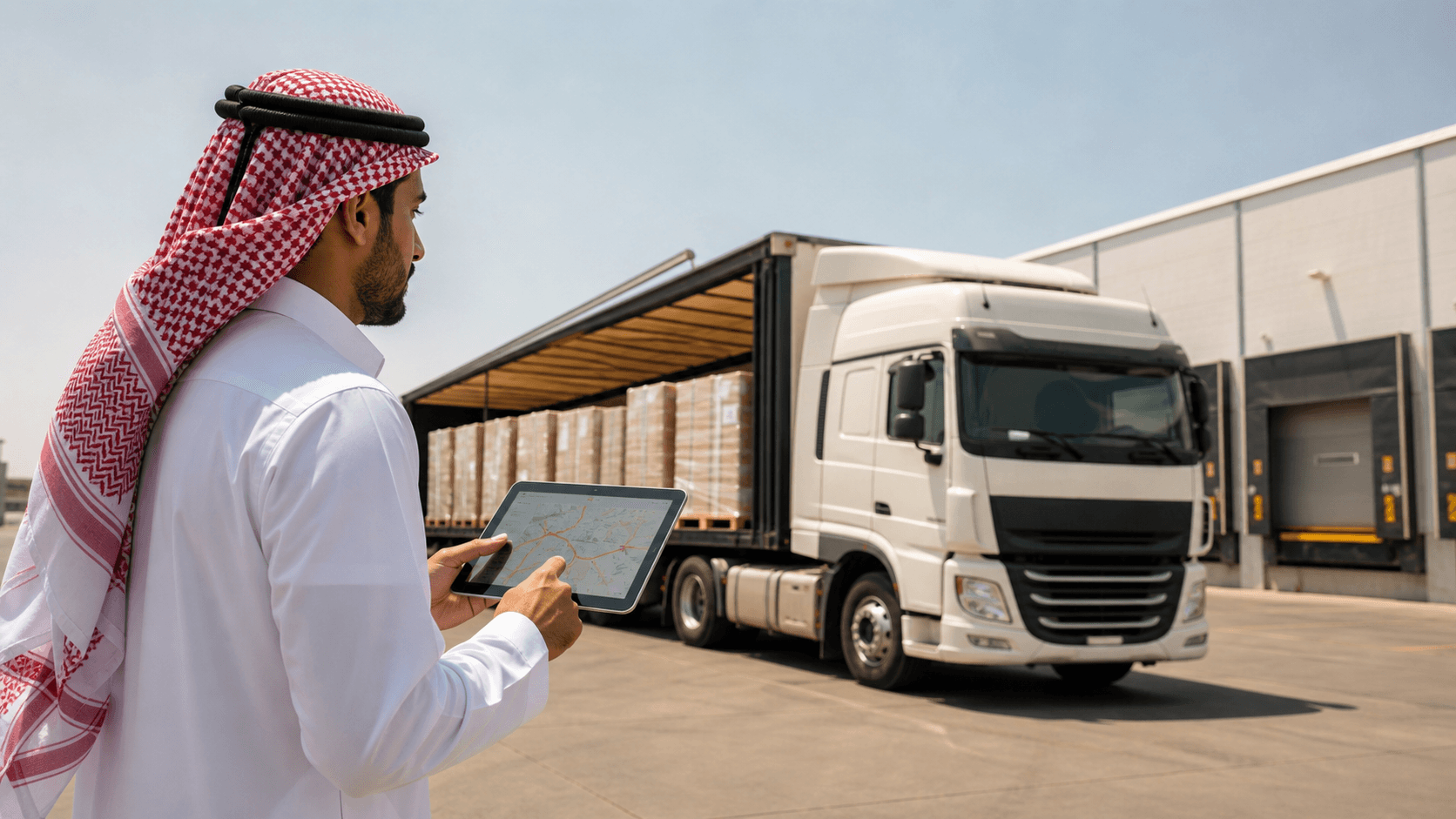
GPS-enabled fleet visibility and shipment tracking help teams understand progress during a movement. This can support more accurate estimated arrival discussions, route management and coordination with a receiving location. It does not eliminate traffic, weather, access restrictions or changing priorities, but it gives people a better starting point for responding to them.
Customer visibility matters as well. When an importer, distributor or retailer can receive clear status updates, its teams can plan labour, stock availability and customer communication with more confidence. The most useful updates are simple and timely: a milestone reached, a document awaiting confirmation, a revised delivery window or an action needed from a stakeholder.

Warehouse systems make stock easier to manage
A warehouse management system, supported by barcode and scanning practices, helps record receiving, put-away, replenishment, picking and dispatch activity. Inventory accuracy improves when the physical action and the system update happen together. That gives warehouse teams a clearer picture of what is on hand, where it is stored and what can be prepared for the next order.
Technology can also support disciplined exception handling. A damaged carton, an unexpected quantity or a location issue should be recorded in a way that lets the team investigate rather than rely on memory. The system is only as effective as the operating process around it, so training, location standards and careful scanning remain essential.
Transport planning benefits from better inputs
Transportation management tools can help compare delivery requirements, vehicle availability, route options and loading plans. Route optimisation can reduce unnecessary mileage when its recommendations are checked against real-world constraints such as delivery windows, cargo characteristics, driver requirements and site access. The aim is a practical route plan, not an abstract shortest line on a map.
Digital documentation supports that same discipline. Shipping instructions, delivery records and customs-related documents can be easier to retrieve, review and share when they are managed in an organised workflow. Complete and accurate documentation helps prevent administrative delays and makes handovers between freight, customs and land transport teams more controlled.
Data supports judgement; it does not replace it
Operational data can show recurring late departures, stock variances, dwell time, repeated delivery exceptions or patterns in customer demand. Those observations can lead to practical questions: Is a cut-off time realistic? Is a receiving process causing a bottleneck? Are peak volumes being planned early enough? Demand forecasting can be helpful when it is based on sound data and understood alongside market changes and customer plans.
The best logistics decisions still need experienced people. A planner understands the operational context behind a delayed shipment. A warehouse supervisor can see when a system instruction does not match safe work on the floor. LogiSmart uses technology-supported logistics processes to make information more usable, while relying on professional judgement to turn that information into action.
A practical path forward
Businesses do not need to digitise every activity at once. A sensible starting point is to identify the points where visibility is weakest or rework is most frequent: shipment status, inventory records, proof of delivery, document control or customer updates. Improving one connected workflow can produce a clearer operating rhythm and create a foundation for further change.
For teams looking to connect freight, transport, customs and warehousing, our Smart Logistics page explains the services that can support the physical operation. The important question is not which tool is newest; it is whether the process helps people deliver a more controlled, responsive experience.
A successful improvement program also sets ownership. Someone needs to decide which status is authoritative, who resolves a mismatch and how a customer receives an update. Small operating agreements prevent useful systems from becoming parallel sources of information. Teams should measure adoption as well as outcomes: are scanners used at every handover, are exceptions being recorded, and do supervisors have enough time to review them? Those questions keep the focus on a reliable daily practice rather than a software launch.
As the operating model matures, technology can support better collaboration between freight, warehouse, transport and customer-service teams. Information can move with the cargo rather than being reconstructed at every stage. That is valuable for international imports, domestic distribution and specialist handling alike. The most credible digital logistics approach remains grounded in the physical work: safe handling, accurate records, clear responsibility and a realistic plan for the next move.